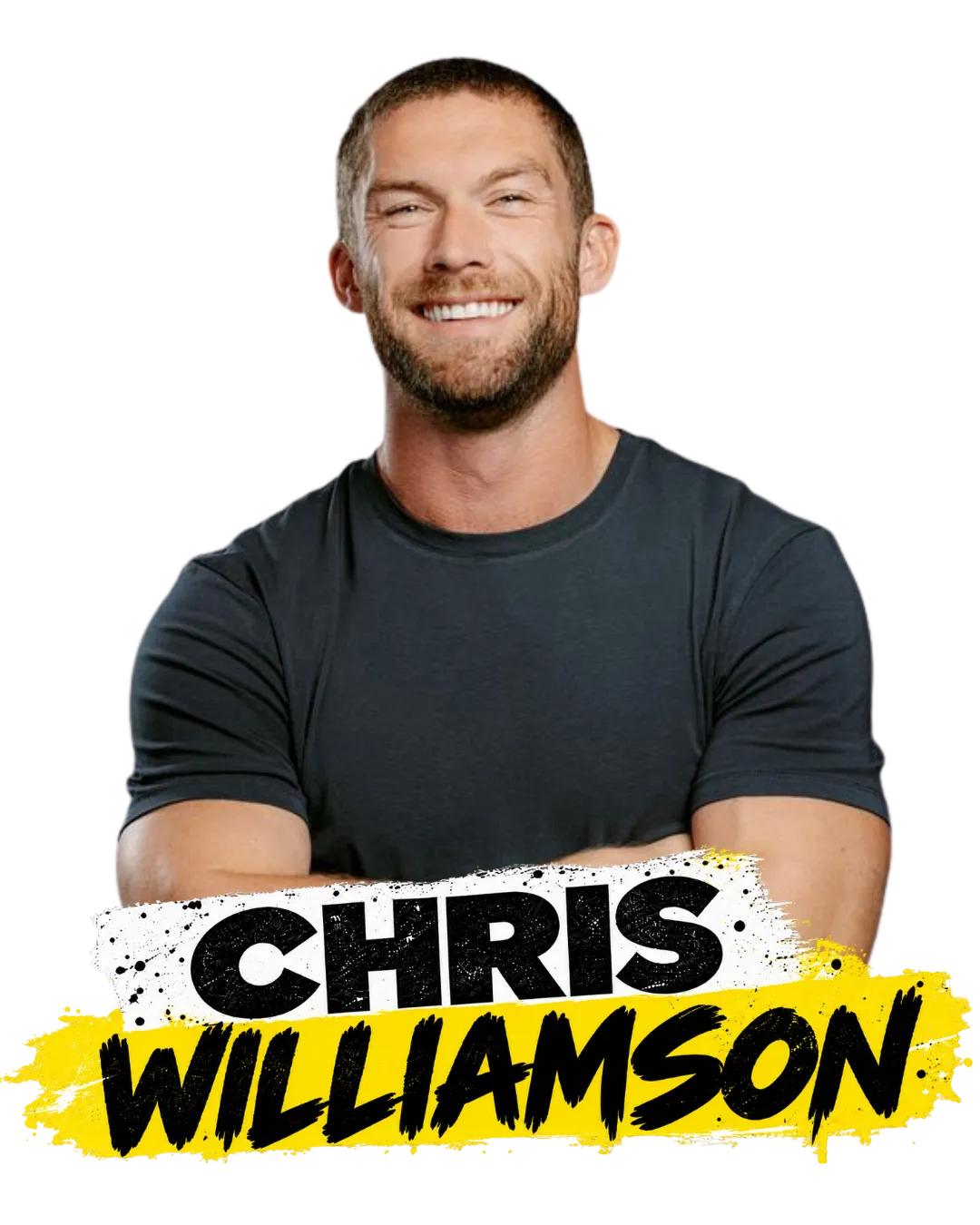
Chris
Do
Loud Introvert, Recovering Graphic Designer, Public Speaker, Emmy® Award Winning Designer/Director, Serial Entrepreneur and the Founder of "The Futur"
Chris Do: The Man Who Turned Creativity into a Competitive Advantage
Sometimes, the most significant changes in business don’t begin with a complicated strategy, but with a simple question: how can you turn what you know how to do into a business that gives you freedom? For Chris Do, the answer came from the intersection of design, education, and entrepreneurship, three fields he would bring together in a way that changed how many creative professionals viewed their own careers.
Today, Chris Do is internationally recognized as a designer, entrepreneur, educator, and content creator. He is the founder of The Futur, a global education platform dedicated to creatives and entrepreneurs, and Blind, the branding, design, and animation company he established in Los Angeles more than three decades ago. Throughout his career, he has worked with major brands, won international awards, and contributed to visual identity, animation, and communication projects, building a strong reputation in the creative industry.
But his influence comes from more than just client projects or the awards he has won. Chris Do became known for identifying one of the biggest challenges facing creative professionals: the gap between being exceptionally good at what you do and knowing how to build a profitable business around your talent.
Through The Futur, he transformed his knowledge of design, branding, negotiation, sales, and entrepreneurship into an educational system accessible to an international community. In doing so, he helped change how hundreds of thousands of creatives approach their work, encouraging them to understand that artistic talent, however valuable, is not enough to build a sustainable career.
To succeed, professionals must know how to communicate the value of their work, negotiate, build relationships, understand clients’ needs, and make decisions with an entrepreneurial mindset. At its core, Chris Do’s story is about this transformation: moving from being paid for what you produce to being valued for how you think, the problems you solve, and the impact you can create.
The Early Years: An Immigrant Child Who Learned to Forge His Own Path
Chris Do was born in Vietnam and moved to the United States with his family as a child, growing up in an environment where resources were limited and financial security was especially important. Like many children from immigrant families, he experienced the pressure to succeed and prove that the sacrifices his parents had made for a better future were worthwhile.
In such circumstances, choosing a creative career did not necessarily seem like the safest option. Design, art, and animation did not offer the same promise of financial stability as traditional professions, and creativity could be seen more as a passion than the foundation of a career. Nevertheless, Chris discovered early on that he had a natural inclination toward drawing, imagery, and visual communication, skills he began to explore and develop.
Gradually, he realized that what initially seemed like a personal interest could become a profession. Later, he would discover that success in a creative field is not determined by artistic talent alone. Equally important are the abilities to understand people, identify problems, and transform ideas into solutions that create value.
This perspective would shape his entire career and eventually become one of the central ideas behind his educational work.
From Designer to Founder of a Creative Company
In 1995, Chris Do founded Blind, a branding, design, and animation company based in Los Angeles. In its early years, the company focused on visual identity, motion design, animation, and communication projects for clients, operating in a competitive industry where portfolios and the quality of execution were the main factors in attracting new business.
As the company grew, Chris began to understand that the difference between an ordinary creative agency and one capable of building valuable client relationships was not just the quality of the final product, but also how the agency positioned its services and its contribution to the client’s business.
A client requesting a logo, an animation, or a video is not simply buying a visual asset. They are looking for a solution that will help them communicate more effectively, stand out, capture their audience’s attention, or solve a business problem. From this perspective, the designer’s role is no longer limited to executing a brief. It can become a strategic one, where understanding the context and asking the right questions are just as important as technical skills.
Chris began evaluating projects based on the results they delivered, rather than just the work required to complete them. What problem does the design solve? What difference does it make to the client’s business? How can the value created be measured, and why should the client choose this solution over a cheaper alternative?
These questions became fundamental to his professional philosophy and to the message he would later share with the creative community: to evolve from a service provider into a strategic partner, you must learn to look beyond what you deliver and understand the impact your work has on the people you serve.
The Hard Lesson: Talent Is Not Enough
One of the most important ideas Chris Do promotes is that talent alone does not guarantee professional success. A designer can create exceptional work while still struggling to attract clients, set appropriate prices, or build a profitable business. Similarly, a photographer, illustrator, or animation specialist may have an impressive portfolio without knowing how to turn that experience into a sustainable career.
In his view, the problem often begins with how creative professionals are educated. They learn to draw, film, edit, develop visual identities, and use technical tools, but receive far less training in contract negotiation, pricing, selling services, or communicating the value of their work.
Chris began speaking openly about these subjects, challenging the idea that a project’s price should be determined solely by the number of hours required to complete it. If a visual identity helps a company stand out in the market, attract new customers, or strengthen its reputation, its value cannot be reduced to the time spent in front of a computer.
This shift in perspective can profoundly influence how creative professionals build their careers because it moves the conversation away from the cost of execution and toward the value of the solution provided. Instead of constantly competing on lower prices, creatives can learn to differentiate their services through expertise, business understanding, and the ability to deliver meaningful results.
The Futur - The Platform That Changed the Conversation About Creative Business
In 2014, Chris Do laid the foundations for The Futur, an educational initiative that would become one of the world’s best-known platforms dedicated to the development of creative professionals. Initially built around video content about design and business, the project gradually expanded to cover a wide range of topics, from branding, strategy, and positioning to sales, negotiation, leadership, communication, and company growth.
The idea behind the platform came from a need Chris had observed throughout his own career: many people knew how to create valuable things, but lacked the tools to turn that ability into a profitable and sustainable business.
The Futur was built specifically to bridge this gap between creative and entrepreneurial skills, providing access to explanations, examples, courses, discussions, and practical resources. Rather than treating creativity as an isolated talent, Chris began presenting it as a skill that could be integrated into a business model, supported by a clear strategy, a well-defined audience, and a compelling value proposition.
A key element of the platform’s success was the decision to use the internet to make education more accessible. Instead of building exclusively a traditional school, Chris invested in consistently publishing content on YouTube and social media, directly addressing the challenges faced by freelancers, designers, and creative entrepreneurs.
The topics were almost always practical: how to attract clients, how to respond when a client thinks your price is too high, how to present your portfolio, how to choose a niche, how to transition from freelancing to running an agency, or how to build a team that can function without the founder’s constant involvement.
For many professionals, these are not simply business questions, but also sources of insecurity and anxiety, because they involve putting yourself out there, negotiating, making decisions, and facing the possibility of rejection. Chris managed to address these issues in a direct and accessible way, using examples from his experience at Blind and his interactions with other professionals.
Over time, The Futur became an international community with millions of followers, while Chris Do strengthened his position as an educator and mentor for professionals seeking to turn creativity into a competitive advantage.
Design as a Business Tool and the Value of Expertise
For Chris Do, design is not just about aesthetics. It is a tool that allows a company to clarify its identity, establish its positioning, and influence how it is perceived by its audience. An effective brand is not simply one that looks good, but one that helps people understand who the company is, what it promises, why it is different, and what value it offers.
This perspective fundamentally changes the designer’s role in the client relationship, transforming them from someone who executes requests into a partner capable of helping define the problem. Sometimes, a company may ask for a new logo or a more modern website when the real issue is a lack of clear strategy, weak positioning, or an inability to communicate what sets it apart from competitors.
A designer who understands business can identify these issues before beginning execution and propose solutions that have a greater impact than simply producing a visual asset. For Chris, this is one of the most valuable transformations a creative professional can make: moving from the question, “What do I need to create?” to “What problem are we trying to solve?”
This is also the foundation of one of the best-known ideas he promotes: creative work should not be priced solely according to the time invested. If a designer with ten years of experience can identify and solve a problem in two hours that would take someone else several days, the client is not merely paying for those two hours. They are paying for accumulated expertise, the ability to make better decisions, and reduced risk.
This philosophy extends beyond design and can be applied to consulting, marketing, programming, architecture, and many other industries where value is created through knowledge and experience. When professionals sell only their time, their growth potential is limited by the number of hours available. By focusing on expertise and results instead, they can unlock opportunities for more profitable and scalable business models.
The Art of Selling Without Losing Your Authenticity
Another central theme in Chris Do’s philosophy is the relationship between creativity and sales, two activities that many professionals consider incompatible. For some creatives, conversations about money, pricing, and contracts feel uncomfortable, while the idea of selling may seem to conflict with authenticity and artistic freedom.
Chris challenges this perspective, arguing that a healthy sales process should not involve pressure or manipulation, but rather understanding the client’s problem and clarifying how it can be solved.
Instead of beginning a sales conversation by presenting services and prices, he encourages professionals to ask questions about the client’s situation, desired outcomes, existing obstacles, and the consequences of leaving the problem unresolved.
In this way, negotiation shifts from a discussion about how much a service costs to a conversation about what matters to the client and the impact the proposed solution could have on their business. When both parties understand the problem and the value of the outcome, price becomes one element of the decision rather than the only criterion used to evaluate the offer.
For Chris Do, the ability to sell is a skill that creative professionals must develop without feeling that they are compromising their identity. Communicating the value of your work does not mean becoming less authentic; it means helping others better understand what you have to offer.
From Freelancer to Entrepreneur: How to Build a Business That Gives You Freedom
One of the challenges Chris Do frequently discusses is the transition from freelancer to entrepreneur. Although the two ways of working may seem similar, the essential difference lies in how value is created and how dependent the business is on the person who founded it.
A freelancer generally sells their time and personal ability to deliver work, while an entrepreneur seeks to build systems, processes, and teams that can generate value without their direct involvement in every activity. This transition is difficult, especially for professionals who have built their reputations on the quality of their individual work and are accustomed to controlling every detail of their projects.
Many end up developing businesses where they are indispensable to every client relationship, every important decision, and every deliverable. Although the company may generate substantial revenue, it fails to provide the freedom they hoped to achieve when they chose entrepreneurship.
Chris challenges creatives to reflect on the business model they want to build and the kind of life that model can provide. Not everyone needs to grow a large agency or manage extensive teams, just as not every independent professional needs to aspire to scale a company.
Some people prefer the freedom of working independently, selecting their own projects, and maintaining control over the creative process, while others want to build organizations, develop products, and create systems that operate over the long term. What matters, in Chris’s view, is making this choice consciously, so that financial success does not come at the expense of personal freedom or result in building a business that does not reflect the founder’s goals.
Positioning, Content, and Community – Three Tools for Growth
Chris Do frequently discusses the importance of positioning in a market where more and more professionals offer similar services. In such an environment, it is not enough for a person or company to communicate that they provide design, marketing, photography, or consulting. They must clearly explain whom they serve, what problem they solve, and why their approach is different.
Positioning requires making choices and sometimes giving up certain opportunities to become more relevant within a specific category. Although specialization may initially seem risky, especially for entrepreneurs who fear losing potential clients, clarity can help build a stronger reputation and attract the right people.
A professional who tries to be relevant to everyone risks being memorable to no one. By contrast, someone who clearly defines their audience and the problem they solve has a better chance of becoming recognized and recommended for that expertise.
Chris applied this philosophy when developing his own brand, using educational content to publicly demonstrate how he thinks and the value he can provide. Instead of keeping all his knowledge behind paid products and services, he chose to consistently publish explanations, analyses, and conversations that allowed people to learn from him before becoming customers.
This approach helped build trust because audiences could experience his expertise directly, rather than relying solely on commercial promises. Content therefore became a tool for education, differentiation, and developing relationships with a community that connected with his ideas and values.
And this community became one of the most important drivers of The Futur’s growth.
Beyond information and educational resources, people seek belonging, feedback, support, and connections with others going through similar experiences. For creative professionals, who often work alone or in small teams, being part of a community can reduce feelings of isolation and create opportunities for collaboration and growth.
Chris understood that education becomes more valuable when accompanied by an environment where people can test ideas, ask questions, and learn from one another. As a result, The Futur evolved not only as a platform for sharing information but also as a place where professionals with similar challenges and ambitions could connect.
This combination of educational content, clear positioning, and community represents one of the most relevant business lessons from Chris Do’s career, demonstrating how expertise can become the foundation of an internationally recognized brand and a business capable of growing beyond traditional services.
Chris Do at FOMO, Festival of Modern Owners
Chris Do comes to FOMO with more than impressive experience in design and creativity. He brings a perspective shaped by more than three decades of entrepreneurship, during which he has explored how talent, strategy, and communication can be transformed into a genuine competitive advantage.
He founded Blind, a creative company that has worked with major brands, and built The Futur, a global education platform through which he has helped professionals around the world better understand the relationship between creativity and business. Throughout this journey, he has become one of the recognized voices encouraging designers, freelancers, and entrepreneurs not to define their value exclusively by what they produce, but also by their ability to identify problems, propose solutions, and generate results.
His story is relevant to any entrepreneur trying to stand out in a competitive market, build a personal brand, communicate their expertise more effectively, or develop a company that does not constantly depend on the founder’s involvement. His lessons on positioning, negotiation, sales, content, and community extend beyond the creative industries and can be applied across numerous fields where knowledge, experience, and problem-solving abilities are a business’s most valuable resources.
For creative professionals, Chris Do’s message is particularly important because it challenges one of the industry’s most widespread beliefs: that talent alone should be enough to succeed. His experience shows that a sustainable career requires more than excellent execution, and that the ability to communicate, negotiate, and build business relationships can decisively influence a company’s direction.
At the same time, his journey raises a question that matters to every founder: how can you build a business that delivers not only financial results but also the freedom to decide how you use your time, energy, and creativity?
At FOMO, Festival of Modern Owners, Chris Do brings a perspective on transforming expertise into a business, building a personal brand, and moving from selling time to creating value that can sustain long-term growth.
In a world where more and more people have access to the same tools, platforms, and information, the difference is no longer determined solely by technical skills, but also by how those skills are applied in context, communicated, and transformed into meaningful solutions for others.
And perhaps the most important lesson from Chris Do’s story is that growing a business does not always begin with learning a new skill or discovering a revolutionary idea. Sometimes, it begins with a fundamental shift in how you perceive the value you are already capable of creating.
Sources:
- The Futur – Chris Do: Official Biography
- Brighter Future – Origin Story Interview with Chris Do (2022)
- The Futur – Our Story: The 1 Billion Mission
- The Futur – How I Went From Charging $500 to $100,000 for a Logo (2025)
- The Futur – Stop Selling Services, Sell Value (2026)
- The Futur – How to Beat the Competition Without Lowering Your Prices (2026)
- PepsiCo Design – Interview with Chris Do
- The Futur – How to Create a Personal Brand That Stands Out
- Proven Entrepreneur – Channeling Out the Inner Entrepreneur in You with Chris Do